6 books like A Beautiful Mind
- A Beautiful Mind by Sylvia Nasar — A Beautiful Mind, the biography, grants access to John Nash's interior world in ways the film cannot…
- The Man Who Mistook His Wife for a Hat by Oliver Sacks — A Beautiful Mind observes how perception can betray the perceiver, how the brain constructs realitie…
- An Unquiet Mind by Kay Redfield Jamison — A Beautiful Mind shows mental illness from the outside even when the camera sits inside Nash's delus…
- The Rosie Project by Graeme Simsion — A Beautiful Mind finds unexpected warmth in Alicia's decision to stand by someone whose mind she can…
- The Curious Incident of the Dog in the Night-Time by Mark Haddon — A Beautiful Mind asks you to trust the protagonist's perception even when it diverges sharply from c…
- Flowers for Algernon by Daniel Keyes — A Beautiful Mind dramatizes the nightmare of losing cognitive function you once commanded; Keyes inv…
Picked for the feeling of A Beautiful Mind, not its genre. Each one is explained below. One movie isn’t much to go on: rate four more and the books are picked for you.
Why these books
The film asks you to experience genius from the inside, to follow a mind that rewrites mathematics while unraveling into paranoid delusion. It dramatizes the cost of brilliance and the slow, unglamorous work of rebuilding a life after catastrophic collapse. These books share that intimate approach to cognitive difference and the people who anchor those unmoored by their own extraordinary minds. They honor the terror and beauty of seeing the world in patterns others cannot perceive.

A Beautiful Mind
A Beautiful Mind, the biography, grants access to John Nash's interior world in ways the film cannot sustain for two hours. Nasar traces the architecture of Nash's mathematical thinking before schizophrenia dismantles it, then follows his decades-long recovery with clinical precision and deep compassion. The book refuses to romanticize either genius or madness. It documents the toll on Alicia Nash and their marriage with uncomfortable honesty. Where the film compresses and dramatizes, the biography accumulates detail until you understand how slowly sanity returns, how tentative hope becomes.

The Man Who Mistook His Wife for a Hat
A Beautiful Mind observes how perception can betray the perceiver, how the brain constructs realities that others cannot see. Sacks chronicles patients whose neurological conditions warp their relationship to the world in ways both devastating and strangely illuminating. His case studies balance clinical observation with profound empathy for people navigating minds that no longer obey familiar rules. The prose is lucid and patient, inviting you to inhabit each altered consciousness. Like Nash's experience, these stories honor cognitive difference without sentimentality, finding dignity in adaptation rather than cure.

An Unquiet Mind
A Beautiful Mind shows mental illness from the outside even when the camera sits inside Nash's delusions; Jamison writes from within. As a psychologist who lives with bipolar disorder, she documents the seduction of mania and the annihilating weight of depression with the precision her training demands. The memoir confronts the tension between accepting treatment and mourning the loss of the euphoric highs that feel inseparable from creativity. Jamison's account of rebuilding a professional life while managing a condition that nearly destroyed it carries the same hard-won hope as Nash's late-career recognition.
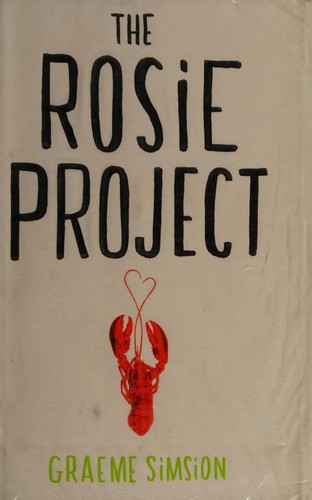
The Rosie Project
A Beautiful Mind finds unexpected warmth in Alicia's decision to stand by someone whose mind she cannot fully reach. Simsion's novel follows Don Tillman, a genetics professor whose rigid systems for navigating social interaction suggest undiagnosed autism, as he pursues a wildly unsuitable romantic partner. The book balances comedy with genuine insight into how someone wired differently experiences intimacy and confusion. Don's narration is precise, logical, and often unintentionally funny, yet the story respects his perspective rather than mocking it. The romance succeeds because both characters adapt rather than one sacrificing everything.
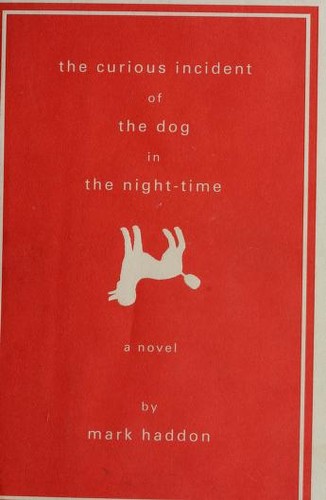
The Curious Incident of the Dog in the Night-Time
A Beautiful Mind asks you to trust the protagonist's perception even when it diverges sharply from consensus reality. Haddon narrates entirely through Christopher Boone, a fifteen-year-old boy who likely has autism, as he investigates a neighborhood dog's death and uncovers family secrets. The prose mirrors Christopher's precise, pattern-seeking mind: diagrams, prime numbers, tangents into mathematical proofs. The mystery matters less than watching Christopher navigate a world engineered for neurotypical processing. The book honors his logic without romanticizing his challenges, finding triumph in small adaptations rather than transformation.

Flowers for Algernon
A Beautiful Mind dramatizes the nightmare of losing cognitive function you once commanded; Keyes inverts the trajectory. Charlie Gordon's intelligence rises from severe disability to genius through experimental surgery, then collapses back. His journal entries track the transformation in real time: syntax, vocabulary, and emotional insight all shifting as his IQ climbs and falls. The novel shares the film's refusal to sentimentalize either end of the spectrum. Charlie's anguish at perceiving his decline, at grasping what he will lose, mirrors Nash's struggle to reclaim reason. Both stories honor the self that persists through cognitive upheaval.
Is A Beautiful Mind based on a book?
A Beautiful Mind is based on Sylvia Nasar’s biography A Beautiful Mind.
What should I read if I loved A Beautiful Mind?
Start with A Beautiful Mind, The Man Who Mistook His Wife for a Hat and An Unquiet Mind. 6 books on this page were picked for the feeling of A Beautiful Mind, not its genre, with a reason for each.
Which book is most like A Beautiful Mind?
A Beautiful Mind by Sylvia Nasar. A Beautiful Mind, the biography, grants access to John Nash's interior world in ways the film cannot sustain for two hours.
These are for everyone who loved A Beautiful Mind. Want books picked for you?
Someone who loved A Beautiful Mind and The Big Lebowski reads different books from someone who loved A Beautiful Mind and Dune. One movie isn’t much to go on. Rate four more — A Beautiful Mind already counts — and the books are picked for you.
Rate four more moviesOr read one book with friends — three of you rate movies, one book you’ll all like.