6 books like A Clockwork Orange
- A Clockwork Orange by Anthony Burgess — Burgess invented Nadsat, a slang that makes Alex's violence feel both alien and hypnotic, so you abs…
- American Psycho by Bret Easton Ellis — A Clockwork Orange gives you a narrator who describes his own sadism with aesthetic pleasure, and El…
- The Wasp Factory by Iain Banks — A Clockwork Orange traps you with a teenage narrator whose violence feels like performance art, and …
- In the Miso Soup by Ryu Murakami — A Clockwork Orange uses extreme violence to ask questions about voyeurism and moral responsibility, …
- The Painted Bird by Jerzy Kosinski — A Clockwork Orange presents violence as theatrical and often sexual, and Kosinski gives you a child …
- Blood Meridian by Cormac McCarthy — A Clockwork Orange choreographs violence with music and color until it becomes a kind of terrible ba…
Picked for the feeling of A Clockwork Orange, not its genre. Each one is explained below. One movie isn’t much to go on: rate four more and the books are picked for you.
Why these books
Kubrick's film locks you inside a performance of violence, then forces you to ask whether cruelty can be cured by more cruelty. It refuses to comfort or moralize, operating instead through saturated color, choreographed brutality, and a narrator whose charm makes his crimes worse. The language itself becomes a weapon and a seduction. These books share that refusal to flinch, that interest in systems that destroy what they claim to fix, and that dangerous intimacy with voices you should not trust.

A Clockwork Orange
Burgess invented Nadsat, a slang that makes Alex's violence feel both alien and hypnotic, so you absorb his brutality through the rhythm of his sentences. The novel goes further than Kubrick's ending, restoring a final chapter that complicates the question of whether people can change or whether society just waits for them to age out of their worst selves. Alex remains charismatic and repellent in equal measure, and the book's interest in free will versus behavioral conditioning refuses easy answers about punishment and reform.
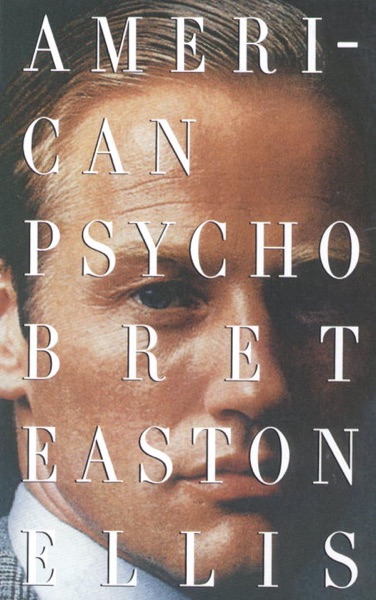
American Psycho
A Clockwork Orange gives you a narrator who describes his own sadism with aesthetic pleasure, and Ellis does the same with Patrick Bateman, whose surface charm and detailed violence create the same queasy intimacy. Both books use style as a narcotic, making you complicit in atrocities by making them sound beautiful or funny. The satire cuts at consumer culture and masculinity, but the book refuses to tell you when to stop reading violence as metaphor and start reading it as real, which is precisely the moral trap Kubrick sets.

The Wasp Factory
A Clockwork Orange traps you with a teenage narrator whose violence feels like performance art, and Banks gives you Frank, who narrates his own cruelty with the same unblinking precision and invented ritual. Both books are interested in what happens when intelligence and imagination turn toward destruction, and both refuse to pathologize their narrators in ways that would let you off the hook. The prose is clean and the horror is methodical, so you feel implicated rather than safely horrified.

In the Miso Soup
A Clockwork Orange uses extreme violence to ask questions about voyeurism and moral responsibility, and Murakami does the same by pairing a Tokyo sex-tour guide with a client whose politeness barely conceals something monstrous. The book builds dread through observation rather than action, then delivers violence so sudden and thorough it recontextualizes everything that came before. Both works force you to ask what it means to witness atrocity and whether understanding a violent person makes you complicit in what they do.

The Painted Bird
A Clockwork Orange presents violence as theatrical and often sexual, and Kosinski gives you a child wandering through a wartime landscape where every adult encounter brings new cruelty rendered in precise, almost clinical prose. Both books refuse to provide moral commentary, letting the acts speak without interpretation. The structure is episodic, each chapter a new degradation, and the cumulative effect is the same question Kubrick asks: whether exposure to brutality destroys innocence or reveals something that was always there.

Blood Meridian
A Clockwork Orange choreographs violence with music and color until it becomes a kind of terrible ballet, and McCarthy does the same with the American West, where scalp hunters move through landscapes of biblical grandeur committing atrocities described in language so elevated it borders on liturgical. Judge Holden, like Alex, philosophizes about violence and dominance with intelligence that makes him more frightening, not less. Both works ask whether evil can be a form of aesthetic achievement and refuse to answer in ways that would provide comfort.
Is A Clockwork Orange based on a book?
A Clockwork Orange is based on Anthony Burgess’s novel A Clockwork Orange.
What should I read if I loved A Clockwork Orange?
Start with A Clockwork Orange, American Psycho and The Wasp Factory. 6 books on this page were picked for the feeling of A Clockwork Orange, not its genre, with a reason for each.
Which book is most like A Clockwork Orange?
A Clockwork Orange by Anthony Burgess. Burgess invented Nadsat, a slang that makes Alex's violence feel both alien and hypnotic, so you absorb his brutality through the rhythm of his sentences.
These are for everyone who loved A Clockwork Orange. Want books picked for you?
Someone who loved A Clockwork Orange and Spotlight reads different books from someone who loved A Clockwork Orange and Unforgiven. One movie isn’t much to go on. Rate four more — A Clockwork Orange already counts — and the books are picked for you.
Rate four more moviesOr read one book with friends — three of you rate movies, one book you’ll all like.