6 books like Braveheart
- The Winter King by Bernard Cornwell — Braveheart's mix of muddy realism and mythic grandeur lives in Cornwell's retelling of the Arthur le…
- Gates of Fire by Steven Pressfield — Braveheart's doomed stand at Stirling Bridge finds its spiritual twin in Pressfield's account of the…
- The Conqueror by Conn Iggulden — Braveheart's arc from personal vendetta to empire-shaking rebellion maps onto Iggulden's portrait of…
- Lonesome Dove by Larry McMurtry — Braveheart's elegiac tone, where men chase honor into certain doom, runs through McMurtry's cattle d…
- Wolf Hall by Hilary Mantel — Braveheart's portrait of power as a contest between will and violence finds a different register in …
- The Killer Angels by Michael Shaara — Braveheart's tragic inevitability, where courage and miscalculation walk hand in hand, defines Shaar…
Picked for the feeling of Braveheart, not its genre. Each one is explained below. One movie isn’t much to go on: rate four more and the books are picked for you.
Why these books
Braveheart gives you the rising arc of impossible rebellion, where a personal wound becomes a national cause and one man's rage transforms into legend. It moves between intimate brutality and sweeping battlefield chaos, never letting you forget that freedom costs blood. These books deliver that same progression from grief to uprising, where historical scope and visceral violence serve a story about what ordinary people sacrifice when they refuse to kneel.

The Winter King
Braveheart's mix of muddy realism and mythic grandeur lives in Cornwell's retelling of the Arthur legend, where Britain's post-Roman warlords fight for survival against Saxon invaders. The battles are close and ugly, shield walls splintering into individual acts of courage and cowardice. Arthur rises not as a destined king but as a bastard warrior who earns loyalty through cunning and sacrifice. The narrative voice carries the weight of memory, turning history into legend without losing the taste of blood and betrayal.
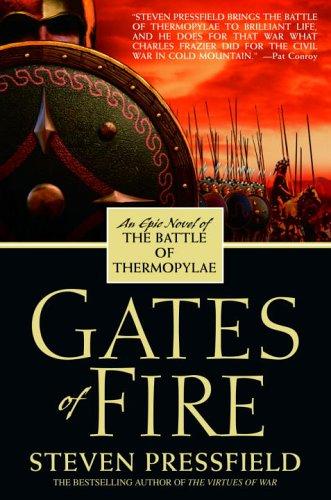
Gates of Fire
Braveheart's doomed stand at Stirling Bridge finds its spiritual twin in Pressfield's account of the three hundred Spartans at Thermopylae. A single narrator recounts how farmers and soldiers bound themselves into an unbreakable wall against the Persian empire. The violence is methodical and exhausting, each wound described with the precision of someone who was there. What starts as duty becomes something larger, a refusal to submit that outlives the men who made it. The book earns its tragedy through intimacy, not spectacle.

The Conqueror
Braveheart's arc from personal vendetta to empire-shaking rebellion maps onto Iggulden's portrait of Genghis Khan, who transforms Mongol tribes into a force that rewrites the world. The storytelling balances clan politics with cavalry charges, showing how loyalty and brutality become inseparable when survival is never guaranteed. Temujin's rise feels earned rather than fated, each alliance and betrayal adding weight to what he builds. The prose stays grounded even as the scope expands, keeping you close to the sweat and calculation of conquest.

Lonesome Dove
Braveheart's elegiac tone, where men chase honor into certain doom, runs through McMurtry's cattle drive epic about aging Texas Rangers on one last impossible journey. The violence arrives suddenly and without mercy, punctuating long stretches of camaraderie and quiet dread. Gus and Call carry the same weight Wallace does, the sense that their code belongs to a world already vanishing. The book lets landscape and silence do the work of myth-making, finding grandeur in stubbornness rather than glory.

Wolf Hall
Braveheart's portrait of power as a contest between will and violence finds a different register in Mantel's Thomas Cromwell, who rises through Tudor England not with a sword but with relentless pragmatism. The stakes are just as mortal, the executions just as intimate. Mantel shows how rebellion and loyalty both require calculation, how one man's clarity can reshape a nation while making him unforgivable. The prose moves with Cromwell's mind, quick and exact, turning political maneuvering into something as visceral as any battlefield.

The Killer Angels
Braveheart's tragic inevitability, where courage and miscalculation walk hand in hand, defines Shaara's account of Gettysburg. The book moves between commanders on both sides, each making choices that feel rational in the moment and catastrophic in hindsight. The battle scenes are precise and mortal, every charge and retreat mattering because you know the men making them. It honors the weight of lost causes without romanticizing them, finding dignity in soldiers who fight for reasons that history will judge and then forget.
Is Braveheart based on a book?
Braveheart isn’t based on a book — it’s an original screenplay by Randall Wallace.
What should I read if I loved Braveheart?
Start with The Winter King, Gates of Fire and The Conqueror. 6 books on this page were picked for the feeling of Braveheart, not its genre, with a reason for each.
Which book is most like Braveheart?
The Winter King by Bernard Cornwell. Braveheart's mix of muddy realism and mythic grandeur lives in Cornwell's retelling of the Arthur legend, where Britain's post-Roman warlords fight for survival against Saxon invaders.
These are for everyone who loved Braveheart. Want books picked for you?
Someone who loved Braveheart and Lock, Stock and Two Smoking Barrels reads different books from someone who loved Braveheart and The Nightmare Before Christmas. One movie isn’t much to go on. Rate four more — Braveheart already counts — and the books are picked for you.
Rate four more moviesOr read one book with friends — three of you rate movies, one book you’ll all like.