6 books like Finding Nemo
- Pax by Sara Pennypacker — Finding Nemo gives equal weight to the parent searching and the child surviving on his own, and Pax …
- The Wild Robot by Peter Brown — Finding Nemo follows a character built wrong for her environment who survives by learning its rules,…
- Skellig by David Almond — Finding Nemo knows that a child facing the world without a parent is not an empowerment fantasy but …
- Hatchet by Gary Paulsen — Finding Nemo watches Nemo figure out how to survive in a dentist's fish tank using only observation …
- The One and Only Ivan by Katherine Applegate — Finding Nemo traps its hero in a glass box and asks what freedom even means when you have forgotten …
- A Snicker of Magic by Natalie Lloyd — Finding Nemo sends a father across the ocean powered by love and desperation, and A Snicker of Magic…
Picked for the feeling of Finding Nemo, not its genre. Each one is explained below. One movie isn’t much to go on: rate four more and the books are picked for you.
Why these books
Finding Nemo splits its heart between catastrophic fear and comic adventure, letting a parent's terror share the screen with a child's wonder. The film trusts small moments of competence to matter as much as grand rescues, and it refuses to let disability be overcome or ignored—Nemo's fin is simply part of who he is. These books honor that same contract: they take anxiety seriously while still letting the journey be thrilling, and they know that coming home changed is not the same as coming home fixed.
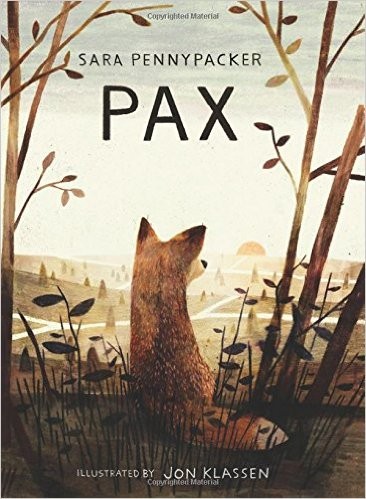
Pax
Finding Nemo gives equal weight to the parent searching and the child surviving on his own, and Pax does the same by alternating between a boy hiking through a war zone to find his pet fox and the fox learning to live wild again. The book treats separation as a wound that changes both sides, not a problem that gets solved. It lets competence grow quietly—learning to read a landscape, trusting a stranger—and it knows that reunion is only part of the story. The stakes are always physical and immediate, but the emotional register stays tender.

The Wild Robot
Finding Nemo follows a character built wrong for her environment who survives by learning its rules, and The Wild Robot gives that premise to Roz, a robot stranded on an island who must figure out how animals communicate and how ecosystems work. The book shares the film's faith that competence is compelling to watch—every chapter shows Roz solving a problem, making a choice, earning trust. It balances physical danger with emotional gentleness, and it treats the community Roz builds as seriously as her individual survival. The tone stays warm even when the stakes are mortal.

Skellig
Finding Nemo knows that a child facing the world without a parent is not an empowerment fantasy but a test of nerve, and Skellig understands the same thing when a boy finds a strange, dying creature in his garage and decides to save it while his family focuses on his newborn sister's failing heart. The book moves at the film's patient rhythm, letting small acts of care accumulate into something enormous. It treats vulnerability as a fact, not a flaw, and it finds wonder in the ordinary made strange. The adventure is quiet but the emotional stakes are crushing.

Hatchet
Finding Nemo watches Nemo figure out how to survive in a dentist's fish tank using only observation and guts, and Hatchet does the same when thirteen-year-old Brian crash-lands in the Canadian wilderness with nothing but a hatchet and has to learn fire, shelter, food, patience. The book shares the film's respect for incremental competence—each chapter teaches Brian one new skill, one new way to stay alive. It never inflates survival into metaphor; the work is the point. The prose is plain and the pacing is steady, and the fear is always specific and physical.

The One and Only Ivan
Finding Nemo traps its hero in a glass box and asks what freedom even means when you have forgotten the ocean, and The One and Only Ivan does the same by letting a gorilla who has lived his entire life in a shopping mall enclosure narrate his own captivity without self-pity. The book shares the film's ability to make confinement feel both unbearable and ordinary, and it builds toward escape without treating it as simple rescue. It trusts quiet moments of friendship to carry as much weight as the plot, and it knows that safety and rightness are not always the same thing.

A Snicker of Magic
Finding Nemo sends a father across the ocean powered by love and desperation, and A Snicker of Magic follows a girl who has spent her life moving from town to town as her mother runs from staying still, until they land in a place that might finally let them stop. The book matches the film's mix of propulsion and tenderness, giving every chapter a small victory or setback that keeps the momentum alive. It treats anxiety as a real force that shapes choices, and it knows that bravery is not the absence of fear but the decision to move anyway. The tone is warm without being precious.
Is Finding Nemo based on a book?
Finding Nemo isn’t based on a book — it’s an original screenplay by Andrew Stanton, Bob Peterson, and David Reynolds.
What should I read if I loved Finding Nemo?
Start with Pax, The Wild Robot and Skellig. 6 books on this page were picked for the feeling of Finding Nemo, not its genre, with a reason for each.
Which book is most like Finding Nemo?
Pax by Sara Pennypacker. Finding Nemo gives equal weight to the parent searching and the child surviving on his own, and Pax does the same by alternating between a boy hiking through a war zone to find his pet fox and the fox learning to live wild again.
These are for everyone who loved Finding Nemo. Want books picked for you?
Someone who loved Finding Nemo and American History X reads different books from someone who loved Finding Nemo and Braveheart. One movie isn’t much to go on. Rate four more — Finding Nemo already counts — and the books are picked for you.
Rate four more moviesOr read one book with friends — three of you rate movies, one book you’ll all like.