6 books like How to Train Your Dragon
- How to Train Your Dragon by Cressida Cowell — The film adapts Cowell's novel about Hiccup, a Viking boy who befriends a dragon instead of slaying …
- The Girl Who Drank the Moon by Kelly Barnhill — The film's structure of a feared creature revealed as misunderstood repeats in Barnhill's novel, whe…
- Dealing with Dragons by Patricia C. Wrede — The film flips the expected dragon-slayer narrative, and Wrede's novel does the same by making a pri…
- Seraphina by Rachel Hartman — The film treats dragons as intelligent beings with their own culture and grief, not monsters to be t…
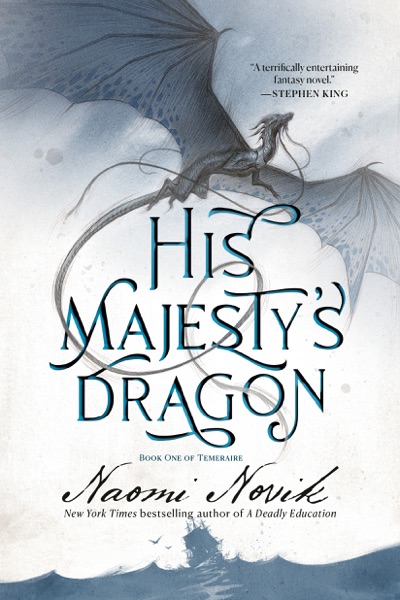
- His Majesty's Dragon by Naomi Novik — The film's dragon-rider bond, built on trust rather than domination, becomes the entire foundation o…
- A Wizard of Earthsea by Ursula K. Le Guin — The film tracks how Hiccup's impulsive mistake creates a bond that eventually saves everyone, and Le…
Picked for the feeling of How to Train Your Dragon, not its genre. Each one is explained below. One movie isn’t much to go on: rate four more and the books are picked for you.
Why these books
The film takes a coming-of-age story and layers it with physical comedy, moral stakes about understanding rather than conquering, and a friendship that rewrites both characters. It earns its emotional beats through action sequences that double as character development. The dragon-riding spectacle never overshadows the smaller moments of trust being built between two mismatched creatures. These books share that combination of propulsive adventure and quiet transformation, where the relationship at the center changes how the protagonist sees their entire world.

How to Train Your Dragon
The film adapts Cowell's novel about Hiccup, a Viking boy who befriends a dragon instead of slaying it, though the book takes a lighter, more comedic tone. Cowell's original leans into slapstick and diary-entry immediacy, with a smaller, more talkative dragon named Toothless. The core remains: a misfit finds courage not through brute strength but through empathy and observation. The novel's illustrations and Hiccup's self-deprecating narration create an intimacy the film translates into visual storytelling, but both versions center on rewriting what it means to be heroic in a culture built on violence.

The Girl Who Drank the Moon
The film's structure of a feared creature revealed as misunderstood repeats in Barnhill's novel, where a dragon and a witch both carry reputations they never earned. A girl raised by the witch grows into powers she does not yet understand, while a town sacrifices its children to a monster that does not exist. Barnhill builds a world where magic operates on love and accident rather than control, and where the act of naming and knowing someone transforms fear into tenderness. The emotional register matches the film's: wonder and grief sitting side by side, with humor threading through the darkest moments.

Dealing with Dragons
The film flips the expected dragon-slayer narrative, and Wrede's novel does the same by making a princess volunteer to work for a dragon rather than wait for rescue. Cimorene finds the dragon Kazul more reasonable than her own royal family, and the two form a partnership built on mutual respect and shared irritation at the kingdoms that keep sending knights. Wrede writes with brisk pacing and comic timing, letting absurdity coexist with genuine stakes. The dragon is never domesticated into cuteness but remains powerful and pragmatic, a peer rather than a pet, which mirrors how Toothless retains his danger even as he bonds with Hiccup.

Seraphina
The film treats dragons as intelligent beings with their own culture and grief, not monsters to be tamed, and Hartman's novel builds an entire political structure on that premise. Dragons in human form negotiate a fragile peace with a kingdom that still fears them, while Seraphina hides her half-dragon nature in a world that would exile her for it. Hartman writes with the same attention to how prejudice operates and how individuals on both sides work to dismantle it. The novel's court intrigue and music theory slow the pace compared to the film, but the emotional architecture is identical: fear dissolved through proximity and understanding.
His Majesty's Dragon
The film's dragon-rider bond, built on trust rather than domination, becomes the entire foundation of Novik's Napoleonic Wars reimagined with an aerial dragon corps. Captain Laurence finds himself unexpectedly bonded to the dragon Temeraire, and their relationship reshapes both their lives as they navigate military duty and a partnership neither chose but both come to value. Novik writes with the same focus on communication across species and the logistics of flight, though her tone skews more naval-adventure formal than the film's lightness. The dragons here are equals, conversational and opinionated, never reduced to beasts of burden.

A Wizard of Earthsea
The film tracks how Hiccup's impulsive mistake creates a bond that eventually saves everyone, and Le Guin's novel follows a young wizard whose reckless pride unleashes a shadow he must learn to face. Ged's journey across islands and through his own shame moves at a contemplative pace, but the structure mirrors the film: a boy grows by confronting what he fears rather than destroying it. Le Guin writes with stark economy, letting action carry meaning without exposition. The final confrontation resolves not through violence but through naming and acceptance, the same moral turn the film makes when Hiccup chooses understanding over conquest.
Is How to Train Your Dragon based on a book?
How to Train Your Dragon is based on Cressida Cowell’s novel How to Train Your Dragon (first in a twelve-book series).
What should I read if I loved How to Train Your Dragon?
Start with How to Train Your Dragon, The Girl Who Drank the Moon and Dealing with Dragons. 6 books on this page were picked for the feeling of How to Train Your Dragon, not its genre, with a reason for each.
Which book is most like How to Train Your Dragon?
How to Train Your Dragon by Cressida Cowell. The film adapts Cowell's novel about Hiccup, a Viking boy who befriends a dragon instead of slaying it, though the book takes a lighter, more comedic tone.
These are for everyone who loved How to Train Your Dragon. Want books picked for you?
Someone who loved How to Train Your Dragon and Die Hard reads different books from someone who loved How to Train Your Dragon and The Godfather Part II. One movie isn’t much to go on. Rate four more — How to Train Your Dragon already counts — and the books are picked for you.
Rate four more moviesOr read one book with friends — three of you rate movies, one book you’ll all like.