6 books like The Hunt
- Disgrace by J.M. Coetzee — The Hunt's claustrophobic focus on a man undone by accusation finds its echo in Coetzee's portrait o…
- We Need to Talk About Kevin by Lionel Shriver — The Hunt's examination of a child's accusation and its annihilating consequences resonates with Shri…
- The Crucible by Arthur Miller — The Hunt's anatomy of community hysteria and false accusation descends directly from Miller's Salem,…
- Notes on a Scandal by Zoë Heller — The Hunt's queasy focus on accusation and the unreliability of narrative finds a companion in Heller…
- The Lottery and Other Stories by Shirley Jackson — The Hunt's portrait of a community turning savage mirrors Jackson's genius for exposing the cruelty …
- Atonement by Ian McEwan — The Hunt's inciting moment—a child's misunderstood words reshaping adult lives—is the engine of McEw…
Picked for the feeling of The Hunt, not its genre. Each one is explained below. One movie isn’t much to go on: rate four more and the books are picked for you.
Why these books
The Hunt watches a decent man become the target of collective hysteria and refuses to offer easy answers or cathartic resolution. It sits with the suffocating dread of false accusation, the speed at which a community turns against one of its own, and the permanent damage done even after vindication. These books share that unflinching moral attention: they examine how suspicion metastasizes, how善 good people participate in cruelty, and how innocence offers no protection against the machinery of social judgment.
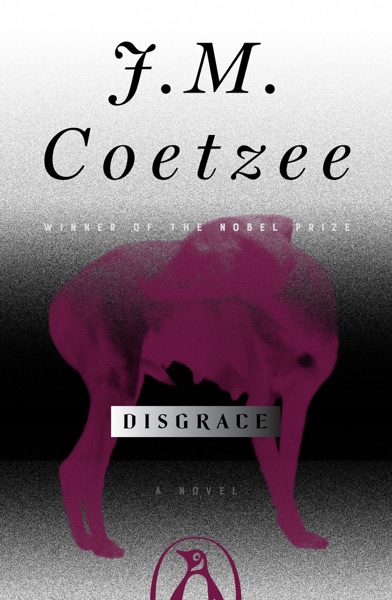
Disgrace
The Hunt's claustrophobic focus on a man undone by accusation finds its echo in Coetzee's portrait of David Lurie, a professor whose life collapses after a misconduct charge. The novel offers no redemption arc, no restoration of reputation, only the slow disintegration of selfhood under the weight of communal judgment. It operates in the same moral register: spare, unyielding, interested in how a person continues when vindication becomes irrelevant. The prose strips away sentiment to examine what remains when social standing evaporates overnight.

We Need to Talk About Kevin
The Hunt's examination of a child's accusation and its annihilating consequences resonates with Shriver's exploration of parental guilt and public condemnation. Eva Khatchadourian writes letters parsing her complicity in her son's violence, facing a community that has already decided her guilt. The novel shares the film's interest in how suspicion becomes certainty, how neighbors become judges, and how a single event rewrites every past interaction. Both works refuse to confirm or deny the central question until the damage is irreversible.

The Crucible
The Hunt's anatomy of community hysteria and false accusation descends directly from Miller's Salem, where suspicion spreads like contagion and good names turn to ash. The play dramatizes the same mechanisms: a child's word becomes gospel, silence reads as guilt, and neighbors weaponize moral panic for private scores. Both works understand that witch hunts require willing participants at every level, that innocence is no defense once the machinery starts grinding. Miller's Proctor and Vinterberg's Lucas face the same impossible choice between truth and survival.

Notes on a Scandal
The Hunt's queasy focus on accusation and the unreliability of narrative finds a companion in Heller's study of a teacher's affair with a student, filtered through the obsessive gaze of a colleague. Barbara Covett's narration destabilizes certainty about guilt and innocence while the scandal itself devours reputations with impersonal efficiency. The novel operates in the same moral shadow: interested in how quickly judgment calcifies, how public opinion feeds on ambiguity, and how the accused become objects rather than people. Both works make voyeurs of their audiences.

The Lottery and Other Stories
The Hunt's portrait of a community turning savage mirrors Jackson's genius for exposing the cruelty embedded in ordinary social rituals. The title story shares the film's understanding of collective violence: how quickly neighbors become executioners, how tradition provides cover for barbarity, how the victim's innocence is beside the point. Jackson's other stories trace the same pattern at smaller scales, showing suspicion and exclusion as social glue. Both artists trust restraint over spectacle, letting horror accumulate through precise observation of human behavior.

Atonement
The Hunt's inciting moment—a child's misunderstood words reshaping adult lives—is the engine of McEwan's novel, where thirteen-year-old Briony's testimony destroys Robbie Turner. Both works examine the irreversibility of accusation, the gap between intention and consequence, and the way a single false claim metastasizes through time. McEwan shares Vinterberg's interest in the mechanics of belief: how authority figures choose narrative over evidence, how class and prejudice determine whose word is trusted, and how apology cannot undo the years that follow conviction.
Is The Hunt based on a book?
The Hunt isn’t based on a book — it’s an original screenplay by Thomas Vinterberg and Tobias Lindholm.
What should I read if I loved The Hunt?
Start with Disgrace, We Need to Talk About Kevin and The Crucible. 6 books on this page were picked for the feeling of The Hunt, not its genre, with a reason for each.
Which book is most like The Hunt?
Disgrace by J.M. Coetzee. The Hunt's claustrophobic focus on a man undone by accusation finds its echo in Coetzee's portrait of David Lurie, a professor whose life collapses after a misconduct charge.
These are for everyone who loved The Hunt. Want books picked for you?
Someone who loved The Hunt and Aliens reads different books from someone who loved The Hunt and Die Hard. One movie isn’t much to go on. Rate four more — The Hunt already counts — and the books are picked for you.
Rate four more moviesOr read one book with friends — three of you rate movies, one book you’ll all like.