What did you love about The Boys?
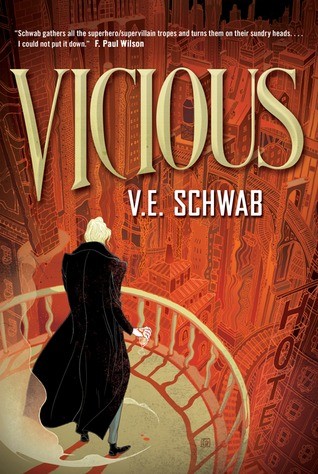
Vicious
Vicious follows two former friends whose superpowers don't redeem them, they just make their rivalry more dangerous.
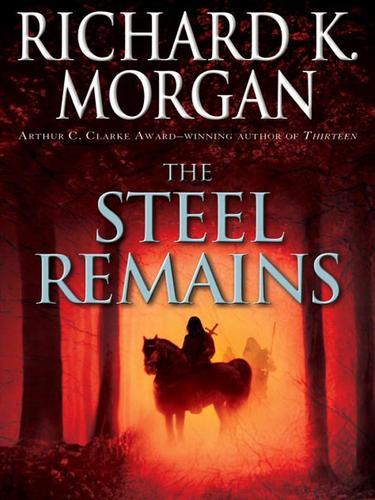
The Steel Remains
The Steel Remains stays with soldiers after the heroic war ends and they're left with trauma nobody wants.

Altered Carbon
Altered Carbon imagines a world where human bodies can be swapped, sold, and discarded like any other commodity.
6 books like The Boys
- The Boys, Vol. 1: The Name of the Game by Garth Ennis — The Boys comics set the template for the series with the same premise: a black-ops team monitors and…
- Soon I Will Be Invincible by Austin Grossman — The Boys drains superhero narratives of their triumphalism, and Grossman does the same by alternatin…
- Vicious by V. E. Schwab — The Boys treats powers as something that corrupt rather than ennoble, and Vicious builds its entire …
- Invisible Man by Ralph Ellison — The Boys examines what it means to be rendered disposable by systems that pretend to protect you, wh…
- The Steel Remains by Richard K. Morgan — The Boys follows soldiers who did ugly work and cannot escape what it made them, which is the exact …
- Altered Carbon by Richard K. Morgan — The Boys imagines bodies as corporate products subject to enhancement, exploitation, and disposal, w…
Picked for the feeling of The Boys, not its genre. Each one is explained below. One show isn’t much to go on: rate four more and the books are picked for you.
Why these books
The Boys punctures superhero mythology by asking what happens when godlike power meets ordinary human corruption. It offers violence as moral consequence rather than spectacle, following characters who have been ground down by systems they cannot escape and who choose ugly methods for necessary work. The narrative refuses both nihilism and comfort, sustaining tension between disgust at what power does to people and sympathy for those trying to survive it. These books share that corrosive clarity about institutions, bodies, and the distance between public virtue and private rot.

The Boys, Vol. 1: The Name of the Game
The Boys comics set the template for the series with the same premise: a black-ops team monitors and occasionally murders superheroes who abuse their power. Ennis writes corporate-controlled heroes as petty, violent, and sexually depraved while the nominal villains struggle with conscience and collateral damage. The visual storytelling is more explicit than the adaptation in its gore and sexual content, but shares the same engine of institutional critique. The relationship between Hughie and Butcher carries identical weight as damaged men negotiating impossible moral terrain under pressure that never relents.
Read it with your book club →
Soon I Will Be Invincible
The Boys drains superhero narratives of their triumphalism, and Grossman does the same by alternating between a supervillain plotting his thirteenth attempt at world domination and a cyborg newcomer to a hero team riven by dysfunction. The novel treats powers as both metaphor and material fact, examining what happens to identity when your body is no longer wholly yours. It dwells on the exhaustion of repeated conflicts and the way heroic teams replicate the hierarchies and cruelties of any other workplace. The tone is melancholic rather than savage, but the disillusionment runs just as deep.
Read it with your book club →
Vicious
The Boys treats powers as something that corrupt rather than ennoble, and Vicious builds its entire structure on that premise. Two former friends, both capable of extraordinary violence, pursue each other across a decade after a experiment in controlled death goes wrong. Schwab gives powers a biological origin that makes them feel like disease as much as gift, and she refuses to sentimentalize either protagonist. The novel moves between timelines to show how ambition and ego curdle into monstrosity, while secondary characters absorb the collateral damage of conflicts that have nothing to do with justice.
Read it with your book club →
Invisible Man
The Boys examines what it means to be rendered disposable by systems that pretend to protect you, which is Ellison's central concern. The unnamed narrator moves through institutions—a Southern college, a paint factory, a political movement—that use him while denying his humanity, each promising empowerment while delivering exploitation. Ellison writes institutional violence as both spectacle and grinding routine, and he gives his narrator a voice that oscillates between rage and bewildered vulnerability. The novel's final vision of a man living underground, invisible to a world that refuses to see him, resonates with anyone ground down by Vought's machinery.
Read it with your book club →
The Steel Remains
The Boys follows soldiers who did ugly work and cannot escape what it made them, which is the exact territory Morgan claims. Ringil Eskiath is a war hero turned pariah, bitter and hyperviolent, living in a fantasy world with the moral physics of a cyberpunk dystopia. Morgan writes combat as trauma rather than adventure and refuses to beautify the aftermath. The novel's three veterans drift through a society that used them and now finds them inconvenient, bound by loyalty to each other and little else. The tone is caustic, the body count high, the meditation on violence and its costs unrelenting.
Read it with your book club →
Altered Carbon
The Boys imagines bodies as corporate products subject to enhancement, exploitation, and disposal, which is the foundation of Morgan's universe. Takeshi Kovacs inhabits a borrowed body while investigating a murder in a future where consciousness is digitized and physical death is negotiable for those who can afford it. Morgan writes this as dystopia rather than transcendence, examining how immortality entrenches power and how bodies become expendable when identity is portable. The noir structure and the protagonist's weary violence mirror Butcher's moral exhaustion, both men doing brutal work in systems designed to protect the powerful from consequence.
Read it with your book club →Is The Boys based on a book?
The Boys is based on Garth Ennis’s comics The Boys, Vol. 1: The Name of the Game (first volume of the 2006–2012 series).
What should I read if I loved The Boys?
Start with The Boys, Vol. 1: The Name of the Game, Soon I Will Be Invincible and Vicious. 6 books on this page were picked for the feeling of The Boys, not its genre, with a reason for each.
Which book is most like The Boys?
The Boys, Vol. 1: The Name of the Game by Garth Ennis. The Boys comics set the template for the series with the same premise: a black-ops team monitors and occasionally murders superheroes who abuse their power.
These are for everyone who loved The Boys. Want books picked for you?
Someone who loved The Boys and Riverdale reads different books from someone who loved The Boys and Oppenheimer. One show isn’t much to go on. Rate four more — The Boys already counts — and the books are picked for you.
Rate four more moviesOr read it with your book club and talk about it while you’re still reading.