What did you love about Breaking Bad?

The Power of the Dog
The Power of the Dog shows men building entire justifications for brutality, each choice leading somewhere they swore they'd never go.
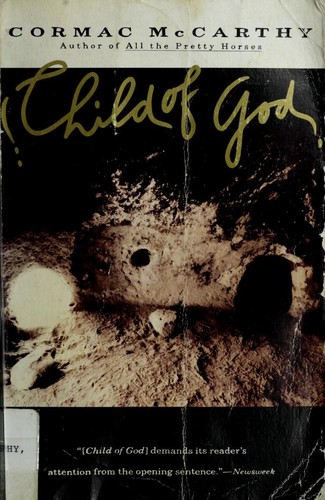
Child of God
Child of God begins with a man who could be anyone and traces exactly how isolation turns him into something unrecognizable.

The Friends of Eddie Coyle
The Friends of Eddie Coyle is all transactions and negotiations, people in the life talking like they're discussing insurance rates.
6 books like Breaking Bad
- The Power of the Dog by Don Winslow — Breaking Bad's Walter White rationalizes his way into monstrosity, and Winslow builds an entire arch…
- American Tabloid by James Ellroy — Breaking Bad turns a chemistry teacher into a criminal through incremental moral erosion, and Ellroy…
- The Friends of Eddie Coyle by George V. Higgins — Breaking Bad shows criminal enterprise as a series of transactions between people who need each othe…
- Child of God by Cormac McCarthy — Breaking Bad traces how isolation and resentment can turn a man into something inhuman, and McCarthy…
- The Cartel by Don Winslow — Breaking Bad builds its criminal empire through Walt's increasingly grandiose self-justifications, a…
- Dog Soldiers by Robert Stone — Breaking Bad watches ordinary people discover they have a taste for the life they thought they were …
Picked for the feeling of Breaking Bad, not its genre. Each one is explained below. One show isn’t much to go on: rate four more and the books are picked for you.
Why these books
Breaking Bad watches a man dissolve his own decency in increments so small he barely notices until he's unrecognizable. The series uses meticulous plotting and corrosive patience to trace a moral collapse that feels both inevitable and chosen. These books share its interest in characters who cross lines they swore they never would, then discover they have appetites they didn't know existed. They chart the physics of compromise: how one decision creates the conditions for the next, how justification becomes reflex, how far ordinary people travel once they start moving in the wrong direction.
The Power of the Dog
Breaking Bad's Walter White rationalizes his way into monstrosity, and Winslow builds an entire architecture of the drug trade on the same principle: good intentions corroded by proximity to violence. His DEA agent Art Keller starts with clean hands and clear purpose, then spends three decades watching his methods darken to match his enemies. The novel tracks how institutions and individuals alike compromise their way into complicity, how the war on drugs creates the very corruption it claims to fight. Winslow writes with the same procedural precision Gilligan uses, showing exactly how cartels function, how money moves, how violence becomes policy.
Read it with your book club →
American Tabloid
Breaking Bad turns a chemistry teacher into a criminal through incremental moral erosion, and Ellroy does the same with three men orbiting the Kennedy assassination. His FBI agents, mobsters, and CIA operatives all start with recognizable human motives, then let ambition and adrenaline strip away their last constraints. The novel shares the series' interest in how proximity to power and violence changes people at the cellular level. Ellroy writes in a percussive, speed-freak style that matches the paranoid energy of Walt's late-season desperation. Both works understand that America runs on the same logic as organized crime: ruthlessness dressed up as patriotism or family values.
Read it with your book club →
The Friends of Eddie Coyle
Breaking Bad shows criminal enterprise as a series of transactions between people who need each other and don't trust each other, and Higgins writes the foundational novel of that exact dynamic. His Boston gun-runner Eddie Coyle navigates a world where every conversation is a negotiation, every favor creates a debt, every relationship is tactical. The book shares the series' bone-deep understanding of criminal economics: how desperation drives decisions, how middle-men get crushed between suppliers and buyers, how loyalty lasts exactly as long as it's useful. Higgins writes dialogue so precise you can hear the moral calculations happening in real time.
Read it with your book club →
Child of God
Breaking Bad traces how isolation and resentment can turn a man into something inhuman, and McCarthy writes that transformation with the same unflinching attention to incremental horror. His Lester Ballard begins as a marginalized outcast, then descends through layers of transgression until he's unrecognizable as the person he was. The novel shares the series' willingness to follow a character past every point where you'd expect redemption or retreat. McCarthy's prose is leaner and more biblical than Gilligan's visual style, but both artists refuse to look away from what people become when every social constraint dissolves. Both understand that monsters are made, not born, through choices so small they almost seem inevitable.
Read it with your book club →
The Cartel
Breaking Bad builds its criminal empire through Walt's increasingly grandiose self-justifications, and Winslow charts the same pathology at institutional scale. His DEA agent Art Keller returns from The Power of the Dog even more consumed by his mission, now fighting a cartel leader who styles himself as a folk hero while ordering massacres. The novel shares the series' understanding of how narcissism fuels brutality: both Walt and Winslow's kingpins believe their own mythology, convince themselves their violence serves a higher purpose. Winslow writes with journalistic precision about how cartels actually operate, giving readers the same procedural education in drug economics that Breaking Bad provides in methamphetamine production.
Read it with your book club →
Dog Soldiers
Breaking Bad watches ordinary people discover they have a taste for the life they thought they were only dipping into, and Stone's novel tracks the same terrible awakening. His journalist John Converse smuggles heroin out of Vietnam as a one-time scheme, then watches everyone involved—including himself—get consumed by the logic of the drug trade. The book shares the series' interest in how quickly amateurism becomes professionalism, how a single criminal act creates its own momentum. Stone writes paranoia and moral decay with the same granular attention Gilligan brings to Walt's transformation. Both works understand that the worst part isn't crossing the line—it's discovering you don't want to go back.
Read it with your book club →Is Breaking Bad based on a book?
Breaking Bad isn’t based on a book — it’s an original series created by Vince Gilligan.
What should I read if I loved Breaking Bad?
Start with The Power of the Dog, American Tabloid and The Friends of Eddie Coyle. 6 books on this page were picked for the feeling of Breaking Bad, not its genre, with a reason for each.
Which book is most like Breaking Bad?
The Power of the Dog by Don Winslow. Breaking Bad's Walter White rationalizes his way into monstrosity, and Winslow builds an entire architecture of the drug trade on the same principle: good intentions corroded by proximity to violence.
These are for everyone who loved Breaking Bad. Want books picked for you?
Someone who loved Breaking Bad and Indiana Jones and the Last Crusade reads different books from someone who loved Breaking Bad and Monty Python and the Holy Grail. One show isn’t much to go on. Rate four more — Breaking Bad already counts — and the books are picked for you.
Rate four more moviesOr read it with your book club and talk about it while you’re still reading.