Unproduced until after the film's success.
Read it with your book club →Read the play after the movie
You already know the story, so the play can give you what a movie has no room for: what the characters are thinking, the scenes that were cut, and the ending as it was written. If you loved the movie, read this next.
5 more books for people who loved Casablanca
Casablanca suspends you in a moral crucible where personal desire crashes against larger duty, where every glance carries the weight of what cannot be said aloud. It operates through restraint and implication, building romantic agony through what characters withhold rather than declare. The war is both backdrop and encroaching reality, making every choice feel consequent. These books place characters at similar crossroads, where love means sacrifice and where the right thing costs everything.

The End of the Affair
Like Casablanca, this novel makes romantic love inseparable from wartime London, from bombs and moral consequence. A man discovers why his married lover ended their affair years earlier, and the answer involves sacrifice he never understood. Greene writes passion as a form of suffering, desire as something that demands renunciation. The tone is bitter and aching, every scene charged with what cannot be taken back. Both stories understand that the most romantic gesture is walking away.
Read it with your book club →
The English Patient
Casablanca haunts this novel about a burned man in an Italian villa, remembering a doomed affair in the North African desert during wartime. Love here is illicit, dangerous, tangled with espionage and betrayal. Ondaatje writes in fragments, circling the central romance, withholding and revealing in rhythm. The war makes everything consequential, every choice about survival and complicity. Both works understand love as a form of recklessness that history will not forgive.
Read it with your book club →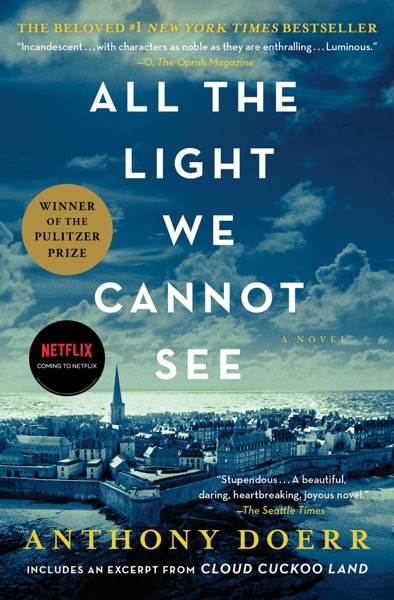
All the Light We Cannot See
Like Casablanca, this novel sets a brief, luminous connection against the machinery of World War II, two people whose lives intersect in a moment of grace before the war pulls them apart. A blind French girl and a German boy exchange what amounts to a handful of scenes, yet the weight of those scenes carries the entire narrative. Doerr writes with the same sense of romantic fatalism, where love is real but cannot survive the historical moment. The ending understands that some reunions happen too late.
Read it with your book club →
The Invisible Bridge
Casablanca compresses wartime impossible choices into one night; this novel stretches them across years, following a Hungarian Jewish architecture student as Europe collapses around him. His romance with a married woman in Paris mirrors Rick and Ilsa, love caught between desire and circumstance, between what they feel and what survival demands. Orringer writes longing and separation with operatic sweep, every tender moment shadowed by encroaching horror. Both works make personal desire inseparable from historical catastrophe.
Read it with your book club →
The Fugitive
Like Casablanca, this short novel set in Jakarta during the Indonesian independence struggle places a man running a neutral gathering place, watching refugees and revolutionaries pass through, trying not to choose sides until he must. The protagonist harbors a fugitive and falls for a woman entangled in the resistance, and suddenly neutrality becomes complicity. Pramoedya writes moral crisis with unsentimental clarity, where every gesture of decency risks everything. Both stories understand that staying uninvolved is its own kind of choice.
Read it with your book club →Want books picked for you?
One movie isn’t much to go on. Rate four more — Casablanca already counts — and the books are picked for you.
Rate four more movies