Published in English as City of God.
Read it with your book club →Read the novel after the movie
You already know the story, so the novel can give you what a movie has no room for: what the characters are thinking, the scenes that were cut, and the ending as it was written. If you loved the movie, read this next.
5 more books for people who loved City of God
City of God plunges you into decades of escalating violence in a Rio favela, told through interlocking stories that refuse to moralize or look away. The film moves with documentary urgency but shapes its chaos into narrative rhythm, tracking kids who become killers as poverty and circumstance harden into fate. These books replicate that structure: multiple voices witnessing systemic brutality, communities trapped by forces larger than any individual choice, and prose that stays unflinching without sensationalizing suffering.

The Brief Wondrous Life of Oscar Wao
City of God shows how dictatorship and poverty produce cycles of violence that devour the young. Díaz does the same across generations of a Dominican family haunted by Trujillo's regime. The novel switches narrators and time periods, building a mosaic of trauma and survival. It mixes high and low registers, slang and footnotes, pop culture and history. The tone is darkly comic but the body count is real. Both works treat systemic brutality as inheritance, not aberration, and refuse to simplify their characters into victims or villains.
Read it with your book club →
Clockers
City of God tracks young men in the drug trade with documentary precision and narrative drive. Price does the same in a New Jersey housing project, alternating between a street-level dealer and the homicide cop investigating a murder. The novel is patient and granular, showing how the drug economy works and how violence becomes routine. Price respects his characters enough to show their intelligence and their constraints. Both works understand that crime is labor, that the system selects for ruthlessness, and that escape requires luck most people never get.
Read it with your book club →
When the Ground Turns in Its Sleep
City of God embeds personal stories in a landscape shaped by state violence and economic abandonment. Sellers-García sets her novel in a Guatemalan village still reeling from civil war, where a young priest tries to understand the massacre that destroyed the community a generation earlier. The book moves slowly, layering testimonies and silences, showing how collective trauma warps daily life. Both works treat violence as environmental, not exceptional. They ask what it means to bear witness when atrocity is systemic and survival requires forgetting.
Read it with your book club →
The White Tiger
City of God follows kids who become killers because the economy offers no other path to power. Adiga's narrator is a servant in India who murders his way out of the servant class, telling his story as a confession and a manifesto. The novel is darkly comic and morally slippery, refusing to condemn or excuse its protagonist. Both works show how inequality manufactures criminals, how intelligence and ambition curdle in systems designed to keep people down. The tone is matter-of-fact about brutality, angry about the structures that demand it.
Read it with your book club →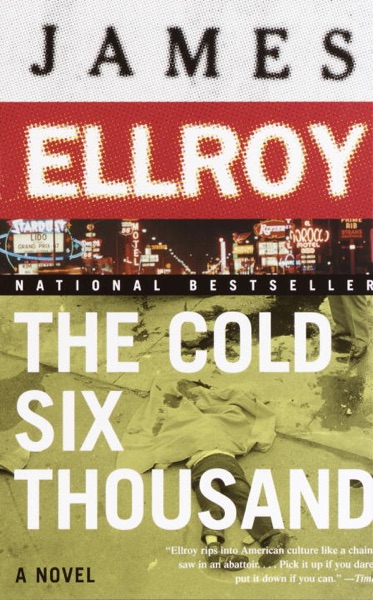
Underworld USA Trilogy
City of God shows how crime and politics intertwine, how violence serves power, how the state and the underworld need each other. Ellroy does the same across three novels covering the American mid-century, from the mob hits to CIA operations to civil rights murders. The prose is staccato and paranoid, characters are corrupt or doomed, and every conspiracy proves real. Both works treat crime as infrastructure, not deviation. They give you the brutal arithmetic of who gets sacrificed and who profits, delivered in prose that never softens the impact.
Read it with your book club →Want books picked for you?
One movie isn’t much to go on. Rate four more — City of God already counts — and the books are picked for you.
Rate four more movies