First in A Song of Ice and Fire.
Read it with your book club →Read the novel after the show
You already know the story, so the novel can give you what a show has no room for: what the characters are thinking, the scenes that were cut, and the ending as it was written. If you loved the show, read this next.
6 more books for people who loved Game of Thrones
Game of Thrones builds a world where power is never stable and no character is safe from consequence. It moves between perspectives without settling on heroes, tracking ambitious families through betrayals, alliances, and the grinding logic of feudal warfare. The series rewards attention to detail and punishes attachment, sustaining tension through scope rather than speed. These books operate by the same rules: sprawling casts, layered political maneuvering, and the understanding that violence reshapes the map.
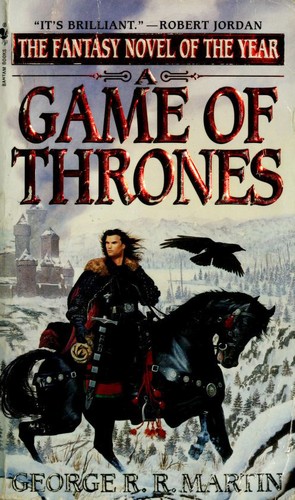
A Game of Thrones
Game of Thrones adapts this novel and its sequels, following the Stark family and rival houses through the wars that fracture Westeros. Martin structures the narrative as interlocking character perspectives, each revealing a fragment of the larger conflict while concealing others. The book establishes the series' willingness to kill major figures without warning, making every chapter feel precarious. Political strategy matters as much as combat, and magic operates at the margins rather than the center. The prose is dense with genealogy, geography, and historical grudges that accumulate into motive.
Read it with your book club →
The Traitor Baru Cormorant
Game of Thrones uses political calculation as a survival tool, and Baru Cormorant does the same in a world shaped by empire and economics. Dickinson follows a young accountant who infiltrates the colonial power that conquered her homeland, ascending through bureaucracy and manipulation rather than force. The book treats statecraft as a sequence of impossible choices, each one narrowing the protagonist's options while expanding her influence. Betrayal is structural rather than emotional, and the cost of winning becomes the real subject. The moral architecture is unforgiving.
Read it with your book club →
The Poppy War
Game of Thrones escalates from political intrigue to total war, and The Poppy War traces the same arc in a world inspired by twentieth-century China. Kuang begins with a war orphan clawing her way into a military academy, then follows her through campaigns that collapse into atrocity. The book withholds easy heroism, showing how desperation and nationalistic fervor turn soldiers into instruments of mass violence. Magic becomes another form of weaponry, terrible in its consequences. The tonal shift from ambition to horror mirrors the series' willingness to darken over time.
Read it with your book club →
The Lies of Locke Lamora
Game of Thrones builds tension through competing schemes, and Locke Lamora does the same in a city ruled by criminal factions and corrupt nobility. Lynch follows a team of con artists who survive by reading people and manipulating appearances, only to find themselves caught in a larger conspiracy. The book balances elaborate heists with sudden violence, letting danger puncture careful planning. Dialogue carries much of the characterization, sharp and profane, and the setting—a fantasy Venice—feels lived-in rather than decorative. Loyalty matters, but it does not guarantee safety.
Read it with your book club →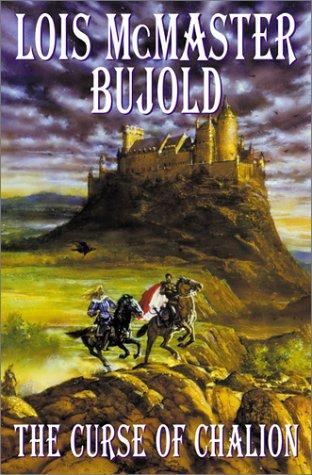
The Curse of Chalion
Game of Thrones treats court politics as a battlefield, and The Curse of Chalion does the same with a protagonist who survives by understanding power without wielding it directly. Bujold follows a broken soldier who becomes tutor to a royal family, navigating succession crises and religious intrigue while physically unable to fight. The book foregrounds negotiation and timing, showing how influence moves through whispers and careful alliances. Magic operates through divine intervention, unpredictable and costly. The pacing is patient, building stakes through incremental shifts in position rather than spectacle.
Read it with your book club →
The First Law
Game of Thrones refuses to separate heroes from perpetrators, and The First Law does the same across a cast of deeply compromised characters. Abercrombie follows a torturer, a vain swordsman, and a crippled war hero through a conflict where every faction is equally ruthless and no victory feels clean. The book treats violence as consequence rather than catharsis, grinding down ideals until pragmatism is all that remains. Dialogue is caustic, humor exists alongside brutality, and the structure moves between perspectives to show how individual actions ripple into disaster. Cynicism is structural, not decorative.
Read it with your book club →Want books picked for you?
One show isn’t much to go on. Rate four more — Game of Thrones already counts — and the books are picked for you.
Rate four more movies