Published in English as Kiki's Delivery Service.
Read it with your book club →Read the novel after the movie
You already know the story, so the novel can give you what a movie has no room for: what the characters are thinking, the scenes that were cut, and the ending as it was written. If you loved the movie, read this next.
6 more books for people who loved Kiki's Delivery Service
Kiki's Delivery Service watches a young witch learn that independence means loneliness before it means belonging. The film moves at the pace of daily life: deliveries, small talk, the slow accumulation of friendships. Its conflict is internal—not a villain to defeat but a crisis of purpose when magic stops feeling like enough. These books trust the same quiet stakes, where growing up means finding work that matters and a place that feels like home.

Majo no Takkyūbin
Kiki's Delivery Service began here, in Kadono's novel about a thirteen-year-old witch leaving home to complete her training. The book dwells longer on Kiki's year away, following her through seasons of deliveries and the subtler anxieties Miyazaki condensed into his film. Kadono writes coming-of-age as a series of small adjustments: learning to talk to customers, managing money, understanding that kindness is work. The stakes stay domestic, the magic unshowy. Where the film gives you a summer of transformation, the novel gives you the whole first year.
Read it with your book club →
Howl's Moving Castle
Kiki's Delivery Service treats magic as a trade you practice, not a power you wield, and Jones does the same with Sophie's slow discovery of her own enchantments. The novel follows a girl cursed into old age who finds work in a wizard's moving castle, where domestic tasks—cleaning, cooking, negotiating with a fire demon—become the story's center. Jones writes a world where magic is threaded through ordinary life, where the work of maintaining a household matters as much as any spell. The plot moves by accumulation, not explosion.
Read it with your book club →
A Wizard of Earthsea
Kiki's Delivery Service shows a young magic-user losing confidence in her abilities, and Le Guin builds a novel on the same crisis. Ged, a talented wizard-in-training, unleashes a shadow he cannot control and spends the book learning that mastery means understanding your limits, not transcending them. Le Guin writes magic as work that requires discipline and humility, where the hero's journey is internal. The book's second half is a long pursuit across islands, quiet and inexorable, toward a confrontation that resolves through acceptance rather than combat.
Read it with your book club →
The Chime Seekers
Kiki's Delivery Service watches a girl find her purpose through small acts of service, and Montgomery's novel follows a boy and a magical dog hunting for a lost child across a city of enchantments. The book builds its world from curiosities—fortune-teller frogs, memory-selling shops—where magic is local and specific, woven into neighborhoods. Montgomery writes a quest as a series of encounters with ordinary people in need of help, where the stakes stay personal. The tone is gentle even when the danger is real.
Read it with your book club →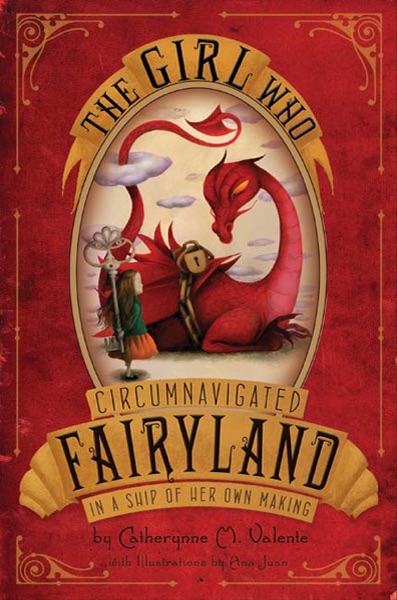
The Girl Who Circumnavigated Fairyland in a Ship of Her Own Making
Kiki's Delivery Service lets a girl strike out alone into a world that tests her readiness, and Valente writes the same journey as surreal picaresque. September, pulled into Fairyland, travels from province to province solving problems with wit and improvisation, making friends with a Wyverary and a Marid along the way. Valente's prose is lush where Miyazaki's film is plain, but both trust that growing up means learning when to help and when to let go. The stakes are cosmic but the lessons are small-scale and earned.
Read it with your book club →
The House in the Cerulean Sea
Kiki's Delivery Service finds magic in the rhythms of daily life—baking, delivering, befriending—and Klune writes a social worker's assignment to evaluate an orphanage of magical children as a story about choosing care over protocol. The novel moves slowly, letting its protagonist settle into routines and relationships, finding purpose in the small work of showing up. Klune writes a world where magic is real but bureaucracy is too, where the happy ending is about building a home rather than saving the world.
Read it with your book club →Want books picked for you?
One movie isn’t much to go on. Rate four more — Kiki's Delivery Service already counts — and the books are picked for you.
Rate four more movies