What did you love about Interstellar?
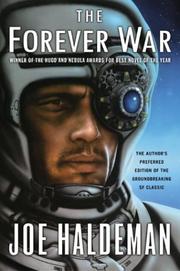
The Forever War
The Forever War gives you that same gut punch of time dilation stealing someone's family away.
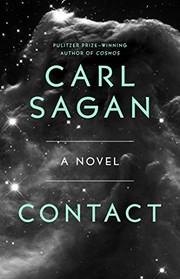
Contact
Contact turns the search for connection across the universe into something both scientifically rigorous and spiritually overwhelming.
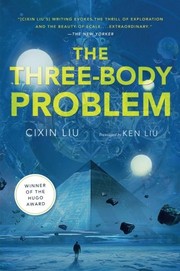
The Three-Body Problem
The Three-Body Problem operates on that same scale where physics gets so extreme it rewrites what's possible.
6 books like Interstellar
- Contact by Carl Sagan — If you loved Interstellar's blend of real science with spiritual yearning, Contact is its literary a…
- The Three-Body Problem by Liu Cixin — If you loved the immense, reality-bending scope of Interstellar's physics, this Hugo Award–winning n…
- The Forever War by Joe Haldeman — If the scene where Cooper watches decades of his children's messages gutted you, this novel will hit…
- Hyperion by Dan Simmons — If you loved how Interstellar wove personal sacrifice into its space opera, Hyperion does the same t…
- Exhalation: Stories by Ted Chiang — If you loved how Interstellar turned physics into poetry, Ted Chiang does this better than anyone al…
- Red Mars by Kim Stanley Robinson — If you loved the idea of humanity reaching for a new world to survive, Red Mars is the most rigorous…
Picked for the feeling of Interstellar, not its genre. Each one is explained below. One movie isn’t much to go on: rate four more and the books are picked for you.
Why these books
Interstellar's power lies in marrying hard science with raw, desperate love — the loneliness of deep space measured against the ache of a parent watching their child grow up without them. These books capture that same gravitational pull between cosmic wonder and intimate human stakes, offering stories where the physics of the universe bends under the weight of what we feel for each other.
Contact
If you loved Interstellar's blend of real science with spiritual yearning, Contact is its literary ancestor. Sagan's novel follows a scientist who receives a message from the stars and must reckon with what it means for humanity — the same tension between empirical rigor and faith that drives Cooper through the wormhole.
Read it with your book club →
The Three-Body Problem
If you loved the immense, reality-bending scope of Interstellar's physics, this Hugo Award–winning novel operates on a similar scale. It unfolds a first-contact story that stretches from China's Cultural Revolution to the edge of the cosmos, with the same willingness to confront humanity's fragility against the indifference of the universe.
Read it with your book club →
The Forever War
If the scene where Cooper watches decades of his children's messages gutted you, this novel will hit just as hard. Haldeman uses relativistic time dilation as more than a plot device — it becomes the emotional core, as a soldier returns from each deployment to find centuries have passed and everything he loved is unrecognizable.
Read it with your book club →
Hyperion
If you loved how Interstellar wove personal sacrifice into its space opera, Hyperion does the same through a Canterbury Tales structure — seven pilgrims each tell a devastating story on their way to confront a godlike being. The novel shares Interstellar's ambition to make you feel both the vastness of space and the smallness of human heartbreak.
Read it with your book club →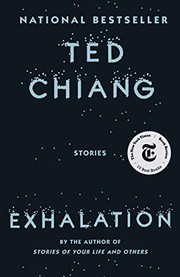
Exhalation: Stories
If you loved how Interstellar turned physics into poetry, Ted Chiang does this better than anyone alive. Each story in this collection takes a scientific or philosophical concept — time, entropy, free will — and finds the profound emotional truth hiding inside it, with a precision and tenderness that Nolan clearly admires.
Read it with your book club →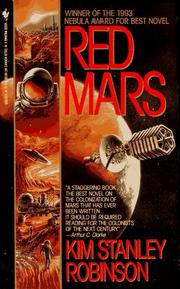
Red Mars
If you loved the idea of humanity reaching for a new world to survive, Red Mars is the most rigorous and human version of that story ever written. Robinson follows the first hundred colonists on Mars as they struggle not just with the planet's hostility but with each other — the same friction between survival, ambition, and the bonds that hold people together.
Read it with your book club →Is Interstellar based on a book?
Interstellar isn’t based on a book — it’s an original screenplay by Jonathan and Christopher Nolan; the physicist Kip Thorne wrote the companion book The Science of Interstellar.
What should I read if I loved Interstellar?
Start with Contact, The Three-Body Problem and The Forever War. 6 books on this page were picked for the feeling of Interstellar, not its genre, with a reason for each.
Which book is most like Interstellar?
Contact by Carl Sagan. If you loved Interstellar's blend of real science with spiritual yearning, Contact is its literary ancestor.
These are for everyone who loved Interstellar. Want books picked for you?
Someone who loved Interstellar and When Harry Met Sally reads different books from someone who loved Interstellar and A Fistful of Dollars. One movie isn’t much to go on. Rate four more — Interstellar already counts — and the books are picked for you.
Rate four more moviesOr read it with your book club and talk about it while you’re still reading.