What did you love about Inception?
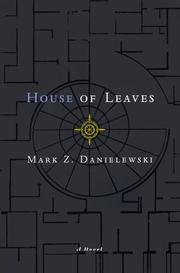
House of Leaves
House of Leaves traps you in a house that shouldn't exist, each hallway opening into impossible architecture.
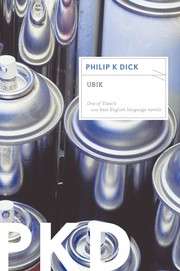
Ubik
Ubik decays reality around its characters until they can't tell if they're alive or already dead.
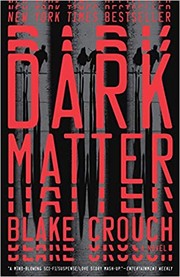
Dark Matter
Dark Matter makes you solve the puzzle of which version of your life is real across infinite possibilities.
6 books like Inception
- Dark Matter by Blake Crouch — A physicist is kidnapped and wakes up in a version of his life where he made different choices — and…
- House of Leaves by Mark Z. Danielewski — A house that is bigger on the inside than the outside.
- Recursion by Blake Crouch — A neuroscientist discovers how to send people back into their own memories — and the technology star…
- Ubik by Philip K. Dick — Reality starts decaying — objects regress to earlier versions of themselves, time runs backward in p…
- The City & The City by China Miéville — Two cities occupy the same physical space but their residents are trained from birth to 'unsee' the …
- The Lathe of Heaven by Ursula K. Le Guin — A man's dreams literally reshape reality — each night he sleeps, the world changes to match what he …
Picked for the feeling of Inception, not its genre. Each one is explained below. One movie isn’t much to go on: rate four more and the books are picked for you.
Why these books
Inception works because beneath the heist mechanics and folding cityscapes, it's a grief story — a man trying to let go of his dead wife by building and destroying worlds inside his own head. These books share that architecture: layered realities where the rules keep shifting, and the real stakes turn out to be not what's real but what you can't stop feeling.
Dark Matter
A physicist is kidnapped and wakes up in a version of his life where he made different choices — and then has to navigate an infinite branching multiverse to get back to the family he loves. It has Inception's velocity and its central question (which reality is the real one?) but trades dream logic for quantum mechanics. You'll finish it in a single sitting.
Read it with your book club →
House of Leaves
A house that is bigger on the inside than the outside. A hallway that wasn't there yesterday. Rooms that rearrange themselves. If Inception's folding Paris blew your mind, this novel does the same thing to a suburban home — and to the book itself, which spirals into footnotes within footnotes, unreliable narrators narrating unreliable narrators. It's the only novel that feels like being inside a dream.
Read it with your book club →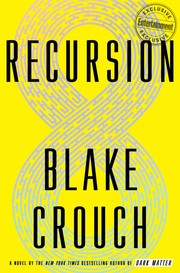
Recursion
A neuroscientist discovers how to send people back into their own memories — and the technology starts rewriting reality for everyone. Crouch takes Inception's premise (infiltrating someone's mind to plant an idea) and asks what happens when that power scales to civilization. The nested timelines hit the same vertigo as Nolan's dream-within-a-dream structure.
Read it with your book club →
Ubik
Reality starts decaying — objects regress to earlier versions of themselves, time runs backward in pockets, and nobody can tell whether they're alive, dead, or dreaming. Dick wrote this in 1969 and it reads like the novel Inception was reverse-engineered from. The paranoia is genuine because the rules are never fully explained, which is exactly what makes the spinning top so effective.
Read it with your book club →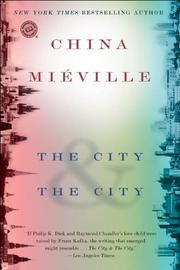
The City & The City
Two cities occupy the same physical space but their residents are trained from birth to 'unsee' the other city. A murder mystery forces a detective to cross between them. Miéville builds overlapping realities not through technology but through collective belief — a more unsettling version of Inception's shared dreaming, because everyone is doing it while wide awake.
Read it with your book club →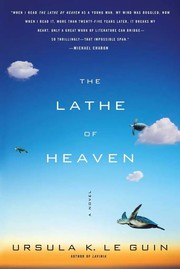
The Lathe of Heaven
A man's dreams literally reshape reality — each night he sleeps, the world changes to match what he dreamed, and only he remembers what it was before. Le Guin uses this premise to explore the ethics of world-building that Inception treats as a heist problem. It's shorter and more philosophical than Nolan's film, but the central vertigo — which version of the world is real? — is the same.
Read it with your book club →Is Inception based on a book?
Inception isn’t based on a book — it’s an original screenplay by Christopher Nolan.
What should I read if I loved Inception?
Start with Dark Matter, House of Leaves and Recursion. 6 books on this page were picked for the feeling of Inception, not its genre, with a reason for each.
Which book is most like Inception?
Dark Matter by Blake Crouch. A physicist is kidnapped and wakes up in a version of his life where he made different choices — and then has to navigate an infinite branching multiverse to get back to the family he loves.
These are for everyone who loved Inception. Want books picked for you?
Someone who loved Inception and American History X reads different books from someone who loved Inception and Braveheart. One movie isn’t much to go on. Rate four more — Inception already counts — and the books are picked for you.
Rate four more moviesOr read it with your book club and talk about it while you’re still reading.