What did you love about The Matrix?

Neuromancer
Neuromancer puts you inside the matrix Gibson invented, all neon and data streams before the Wachowskis visualized it.
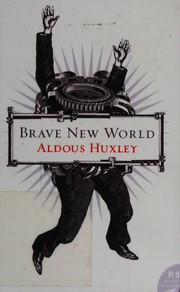
Brave New World
Brave New World asks what if everyone took the blue pill willingly, choosing comfortable lies over hard truth.
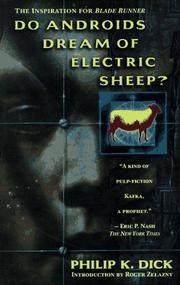
Do Androids Dream of Electric Sheep?
Do Androids Dream tackles the same question through empathy tests and memories that might be implanted.
6 books like The Matrix
- Neuromancer by William Gibson — The novel that invented cyberpunk and coined 'cyberspace.' Case is a burnt-out hacker hired for one …
- Do Androids Dream of Electric Sheep? by Philip K. Dick — The novel behind Blade Runner, but more relevant here than there.
- Snow Crash by Neal Stephenson — A pizza-delivering hacker-swordsman discovers a virus that can infect people through both the virtua…
- Brave New World by Aldous Huxley — Huxley's dystopia is The Matrix as social engineering — people aren't imprisoned in pods, they're ke…
- The Three Stigmata of Palmer Eldritch by Philip K. Dick — Colonists on Mars use a drug to enter a shared virtual reality — and then a new drug arrives that mi…
- Simulacra and Simulation by Jean Baudrillard — The actual book Neo hollows out to hide his contraband in the film's opening scene — and the Wachows…
Picked for the feeling of The Matrix, not its genre. Each one is explained below. One movie isn’t much to go on: rate four more and the books are picked for you.
Why these books
The Matrix made one question inescapable: what if everything you see, touch, and feel is a simulation designed to keep you compliant? These books were asking that question before Neo ever took the red pill — and they go further, probing not just simulated reality but the nature of consciousness, free will, and what it even means to wake up.
Neuromancer
The novel that invented cyberpunk and coined 'cyberspace.' Case is a burnt-out hacker hired for one last job that takes him into the matrix — yes, Gibson used the word first — and the neon-noir world he navigates is the direct ancestor of the Wachowskis' green-tinted digital rain. Written in 1984, it predicted the internet, virtual reality, and corporate surveillance with eerie precision.
Read it with your book club →
Do Androids Dream of Electric Sheep?
The novel behind Blade Runner, but more relevant here than there. Dick's bounty hunter lives in a world where the line between human and machine has dissolved, empathy is manufactured by a device, and the 'real' world might be as artificial as the androids he hunts. The Matrix borrowed Dick's central paranoia: that authentic experience might be indistinguishable from programmed experience.
Read it with your book club →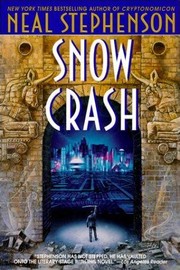
Snow Crash
A pizza-delivering hacker-swordsman discovers a virus that can infect people through both the virtual Metaverse and the real world. Stephenson's 1992 novel is faster, funnier, and more anarchic than The Matrix — and its vision of a corporate-controlled virtual reality layered over a collapsed America now reads less like science fiction and more like a business plan. The action sequences are as good as the kung fu.
Read it with your book club →
Brave New World
Huxley's dystopia is The Matrix as social engineering — people aren't imprisoned in pods, they're kept docile with pleasure, drugs, and engineered contentment. The genius of both stories is the same: the prison works because the inmates don't know they're in one. Huxley saw this in 1932, and his version might be more prophetic than Orwell's, because comfort turns out to be a better cage than fear.
Read it with your book club →
The Three Stigmata of Palmer Eldritch
Colonists on Mars use a drug to enter a shared virtual reality — and then a new drug arrives that might trap users in someone else's simulation permanently. Dick published this in 1965 and it reads like a draft of The Matrix's core nightmare: a reality you can't exit, designed by an intelligence that might not have your best interests at heart. It's his most unsettling novel, which is saying something.
Read it with your book club →
Simulacra and Simulation
The actual book Neo hollows out to hide his contraband in the film's opening scene — and the Wachowskis required the entire cast to read it. Baudrillard's argument is that modern society has replaced reality with symbols and signs until the simulation has no original left to simulate. It's dense, it's philosophy not fiction, and it's the intellectual architecture the entire film is built on.
Read it with your book club →Is The Matrix based on a book?
The Matrix isn’t based on a book — it’s an original screenplay by the Wachowskis.
What should I read if I loved The Matrix?
Start with Neuromancer, Do Androids Dream of Electric Sheep? and Snow Crash. 6 books on this page were picked for the feeling of The Matrix, not its genre, with a reason for each.
Which book is most like The Matrix?
Neuromancer by William Gibson. The novel that invented cyberpunk and coined 'cyberspace.' Case is a burnt-out hacker hired for one last job that takes him into the matrix — yes, Gibson used the word first — and the neon-noir world he navigates is the direct ancestor of the Wachowskis' green-tinted digital rain.
These are for everyone who loved The Matrix. Want books picked for you?
Someone who loved The Matrix and Breaking Bad reads different books from someone who loved The Matrix and Lucifer. One movie isn’t much to go on. Rate four more — The Matrix already counts — and the books are picked for you.
Rate four more moviesOr read it with your book club and talk about it while you’re still reading.